

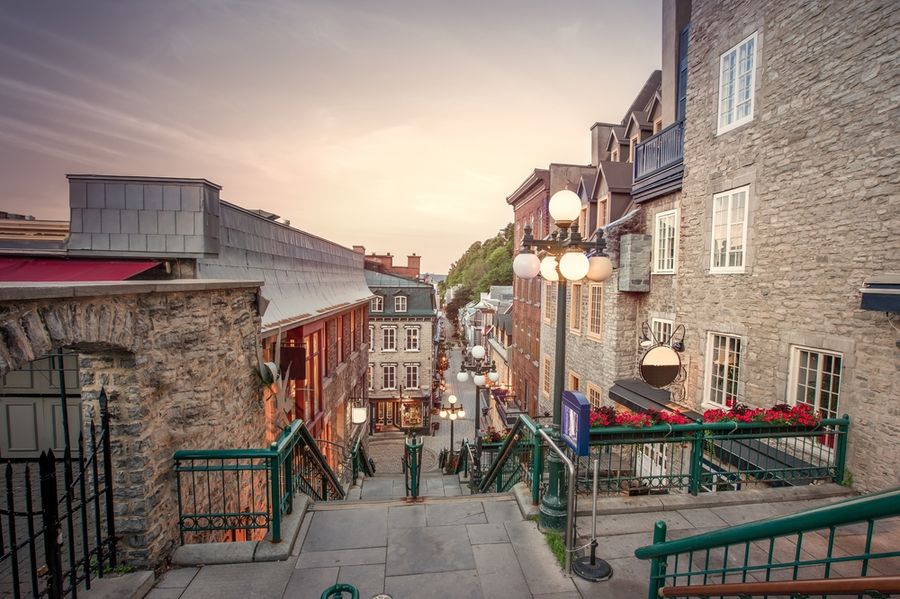
Crossing the Atlantic is not the only way to find stone streets, fortified walls, French conversation, and café-lined neighborhoods. Quebec City brings those elements together within a destination that is far easier for many U.S. travelers to reach. Its appeal goes beyond appearance. The historic center remains active, walkable, and closely tied to French Canadian culture. Add distinctive food and strong seasonal character, and Quebec City offers one of Canada’s most convincing alternatives to a European city break.
A Historic Center With Real Depth
Old Quebec is not a modern district designed to imitate Europe. Quebec City was founded in the 17th century and served as the capital of New France. Its protected historic district includes Upper Town on Cap Diamant and Lower Town around Place Royale and the old harbor.
That history remains visible in the city’s layout. Defensive walls, gates, steep streets, public squares, churches, and stone buildings form a connected setting rather than a handful of isolated landmarks. The preserved district is considered an exceptional example of a fortified colonial town and the most complete one north of Mexico.
Fortifications Change the Feel of the Trip
The walls surrounding Old Quebec create a sense of arrival that is rare in North America. Visitors can move through historic gates, follow sections of the defensive system, and look across the old city from elevated points. The setting feels more like entering a distinct place than simply reaching another downtown district.
The fortifications extend for 4.6 kilometers and remain accessible throughout the year. They also offer broad views and are easy to reach by public transportation. That makes the city’s military history part of an ordinary sightseeing day rather than an attraction that requires a separate drive.
A Car Is Optional in the Main Visitor Areas
Quebec City works especially well for a short trip because many of its best-known areas can be explored without moving a car. Travelers focusing on Old Quebec and nearby central neighborhoods generally do not need one. Buses and other local options can cover trips that fall outside a comfortable walking range.
The terrain is not completely effortless. Cobblestones, slopes, and stairways call for supportive shoes and a realistic pace. Yet those same features help give the city its character. Walking allows visitors to notice courtyards, storefronts, architectural details, and small streets that would be easy to miss from a vehicle.
French Culture Is Part of Everyday Life
French is Quebec’s official language, and its presence shapes signs, menus, greetings, media, and daily conversation. English is widely spoken in the main tourist areas, so most U.S. visitors can manage practical needs without being fluent in French.
That balance is a major strength. The destination feels culturally different without making basic travel overly difficult. Learning a few French greetings can still make interactions warmer and encourage visitors to engage with the city rather than treating its language as background decoration.
The Food Reflects More Than One Tradition
Quebec City’s dining scene strengthens the European-style atmosphere, but it is not limited to classic French cooking. Local menus draw from French, British, Indigenous, traditional French Canadian, and boreal influences, with regional products appearing across many restaurants.
That range gives travelers several ways to experience the city through food. A day might include a bakery breakfast, a simple lunch built around a Quebec specialty, and a more modern dinner using local ingredients. The experience feels tied to the destination instead of being a generic collection of familiar restaurant chains.
Every Season Creates a Different Escape
Summer brings festivals, outdoor activities, and restaurant patios, while fall adds bright color and cooler evenings. Winter changes the city more dramatically, with holiday scenery, the Ice Hotel, and the Quebec Winter Carnival becoming major draws. Spring offers a quieter period as flowers return and visitor activity is more relaxed.
This seasonal range sets Quebec City apart from destinations that have one obvious travel window. A summer visit can feel lively and social, while a winter trip can center on snow, lights, and cold-weather traditions. Travelers can choose the version that best matches the getaway they want.
More Than a European Look
Quebec City earns its reputation because its appeal is not built on one landmark or a few photogenic streets. The preserved historic center, working French culture, walkable visitor areas, varied food, and strong seasonal identity reinforce one another.
For U.S. travelers seeking a European-style break without a transatlantic flight, few Canadian destinations offer the same complete experience. Quebec City feels distinct from home while remaining manageable for a long weekend or a longer stay. That mix of atmosphere, history, and ease makes it the strongest choice for this type of getaway.