

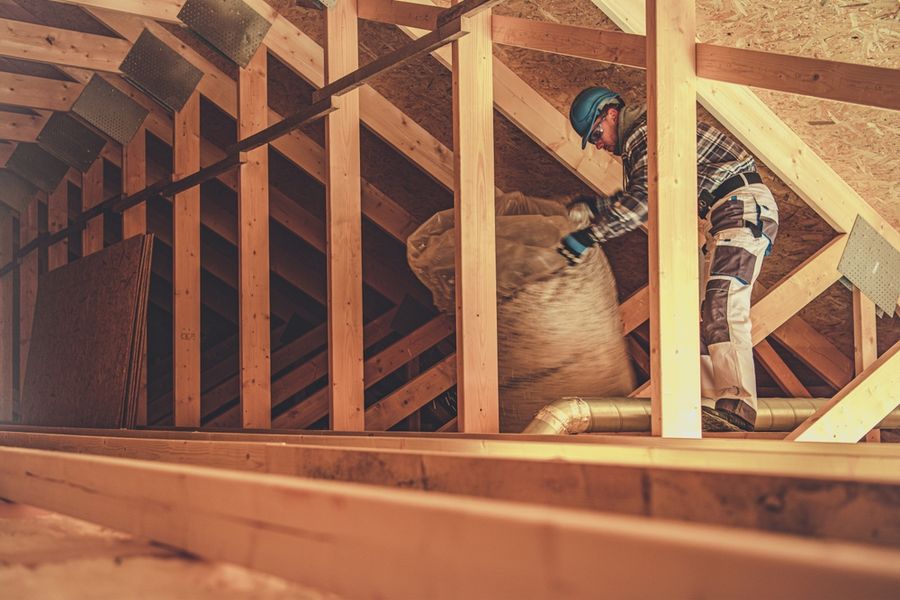
A hot attic can make homeowners wonder whether they should remove heated air or block that heat from reaching the rooms below. Solar attic fans and added insulation approach the problem in different ways. A fan increases attic airflow when sunlight is available, while insulation slows heat moving through the ceiling. For many homes, insulation and air sealing provide the stronger first step, but ventilation can still serve a useful role when the attic system is properly designed.
How Solar Attic Fans Address Heat
A solar attic fan uses energy from a roof-mounted solar panel to pull warm air out of the attic. In hot climates, attic ventilation is intended to remove air heated by the sun and reduce some of the cooling load created by the roof.
That sounds like a direct solution, especially when attic temperatures become extreme. However, lowering the temperature of the attic air does not always produce a large change inside the house. The cooling effect of a well-ventilated roof is generally small.
A fan may still help an attic release heat, but it should not be treated as a replacement for the layers separating the attic from the living area. If the ceiling is poorly sealed or thinly insulated, heat and air can continue moving between the two spaces.
Why Insulation Usually Has the Larger Effect
Attic insulation slows heat transfer between the roof space and the rooms below. During summer, it reduces the amount of attic heat that reaches ceilings and living spaces. During winter, it also helps keep heated indoor air from escaping upward.
Low insulation levels and attic air leaks can force heating and cooling equipment to work harder while making rooms less comfortable throughout the year. ENERGY STAR advises that insulation at or below the height of the attic floor joists is a sign that more may be needed.
This broader effect gives insulation an advantage over a solar attic fan. The fan mainly responds to sunny, hot conditions. Insulation works day and night and helps in both warm and cold seasons. It also continues to perform when clouds reduce the solar panel’s output.
Air Sealing Should Come Before Added Insulation
Adding insulation without closing air leaks can leave an important part of the problem unsolved. Openings around wiring, plumbing, attic hatches, ducts, and ceiling fixtures may let conditioned air escape into the attic. They can also allow warm attic air and moisture to move toward the home.
Air sealing the attic can stop major leaks and help indoor rooms maintain the desired temperature. ENERGY STAR recommends combining attic air sealing with insulation rather than treating them as separate fixes.
The order matters. Existing insulation may need to be moved so gaps can be found and sealed before more material is installed. Homes with recessed lights, chimneys, flues, or fuel-burning equipment may require professional attention because clearances and combustion safety rules must be followed.
When a Solar Attic Fan May Still Make Sense
A solar attic fan may be worth considering after the attic floor has been properly sealed and insulated. It can be useful when an attic has weak airflow, the roof receives strong direct sunlight, and there are enough intake vents to replace the air being exhausted.
A fan cannot move air effectively if the soffit or other intake vents are blocked. It may also pull air from the house through ceiling leaks when easier sources of replacement air are not available. That risk is another reason to complete air sealing before adding powered ventilation.
Ventilation also has a moisture-control role. A durable attic needs a plan for keeping moisture from damaging roof materials or reducing the performance of insulation. The Department of Energy notes that moisture and improper ventilation are closely connected attic concerns. A fan should therefore fit into the home’s full ventilation design rather than being installed only because the attic feels hot.
Compare the Limits of Each Solution
Solar attic fans depend on roof exposure. Shade from trees, nearby buildings, roof angles, and cloud cover can reduce the available solar energy. The fan also affects only the attic air. It cannot repair missing insulation, seal ceiling gaps, or prevent heat from moving through poorly protected surfaces.
Insulation has its own limits. It will not repair a roof leak, clear blocked vents, or remove moisture that is already entering the attic. Poor installation can also leave thin spots near eaves, around attic access points, or beneath stored items.
The strongest result often comes from treating the attic as a complete system. That means checking for water damage, sealing leaks in the attic floor, installing enough insulation at an even depth, and keeping planned ventilation paths open. A fan can then be considered as an added feature rather than the main defense against summer heat.
How to Decide What Your House Needs
Begin with an attic inspection rather than a product choice. Look for uneven or compressed insulation, exposed floor joists, gaps around pipes, stains from water, disconnected ducts, and blocked soffit vents. Rooms that are hard to cool may also point to air leaks or missing insulation over that part of the house.
A home energy assessment can provide more detail. An energy professional may use tools such as a blower door or infrared camera to find leaks and weak areas that are difficult to spot. This can prevent spending money on a fan when the larger problem is the barrier between the attic and the living space.
Homeowners should also consider climate. In a place with long cooling seasons, roof heat and ventilation may deserve more attention. In a mixed climate, added insulation and air sealing are often more useful because they improve comfort during both summer and winter.
The Better First Step for a Cooler Home
For most homes with inadequate attic protection, better insulation combined with air sealing is the stronger first investment. It directly reduces heat transfer into the living space, helps the air conditioner maintain indoor temperatures, and continues working in every season. A solar attic fan may lower attic air temperatures, but its effect on household comfort is usually more limited.
That does not make solar ventilation useless. It can support a well-designed attic that already has proper intake vents, moisture control, air sealing, and insulation. The best approach is to correct the building envelope first and consider a fan only after the basic attic system is working as intended.