

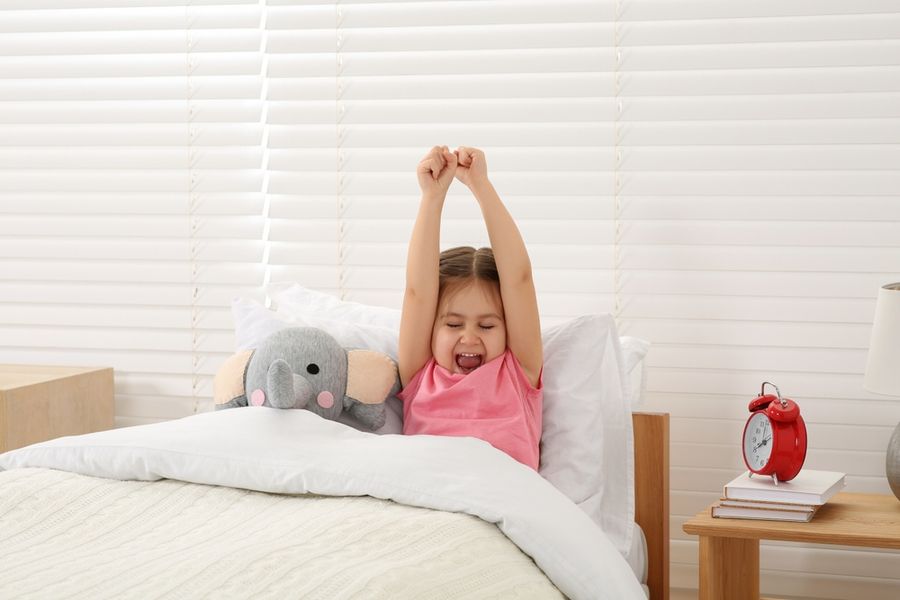
Learning to get up on time is an important step toward greater independence. However, a loud standard alarm may not give a young child enough guidance. Child-friendly clocks use lights, simple pictures, sounds, or changing displays to show when it is time to sleep and when the day can begin. The best models offer different ways to support morning routines, from basic color signals to app-controlled schedules and screen-free audio features.
Hatch Rest 2nd Gen for Custom Morning Routines
The Hatch Rest 2nd Gen combines a sound machine, night-light, alarm, and time-to-rise sleep trainer. Parents can control its settings through the Hatch Sleep app and create routines that use selected colors and sounds at different points in the day. The device also includes physical controls, allowing children to start certain saved routines without handling a phone.
This model may suit families that want the clock to support both bedtime and morning habits. A parent could use one color and sound for winding down, followed by a different light when the child may leave the bedroom. Keeping the routine simple at first can make the signals easier to understand.
App control also lets an adult change the schedule without entering the child’s room. That may be useful when wake-up times differ between school days and weekends. However, parents should decide whether they want a connected device that depends on initial setup through a phone.
LittleHippo MELLA for Clear Visual Signals
The LittleHippo MELLA uses facial expressions and colored lights to guide children through the evening and morning. Its yellow light signals that wake-up time is approaching, while a green light shows that it is time to begin the day. MELLA also functions as an alarm clock, night-light, sleep-sound machine, and nap timer.
These visual changes can help children who do not yet read a digital clock. Instead of asking them to understand that 6:45 is too early but 7:00 is acceptable, parents can teach one direct rule: wait until the light turns green. The changing face adds another clue that a young child can recognize.
MELLA may be especially practical when the main goal is reducing early trips into a parent’s bedroom. Parents can introduce the clock during the day, demonstrate each color, and let the child explain what the signals mean. The morning goal should remain realistic rather than expecting the clock to make a child sleep later than usual immediately.
Yoto Mini 2024 Edition for Audio and Wake-Up Cues
The Yoto Mini 2024 Edition is mainly a portable, screen-free audio player, but it also includes an alarm and an OK-to-wake clock. Parents choose a wake time, and the clock display changes when the child is allowed to get up. The device can also play sleep sounds, including white noise, gentle music, and rain. Volume limits can be managed through the Yoto app.
This option may appeal to children who already enjoy listening to stories or music independently. A bedtime audio card can become part of the evening routine, while the clock display provides a separate cue in the morning. The same device can therefore support quiet time without placing a bright tablet or television in the bedroom.
The wider range of features may be unnecessary for a family that only wants a basic alarm. It makes more sense for a household that also plans to use Yoto’s audio system. Parents should place the device where the display is easy to see but where the child does not need to get out of bed to check it.
PlayMonster OK to Wake for a Simple First Clock
The PlayMonster OK to Wake clock uses a yellow night-light at bedtime and a green light when the chosen wake time arrives. It also has a traditional alarm function, a nap timer, changeable faceplates, and controls hidden behind a childproof panel.
This model offers a more focused approach than clocks with sound libraries or app-based routines. The green signal gives children one clear morning instruction without adding several menus or settings. Changeable faceplates can also make the clock feel like an item that belongs to the child rather than another rule imposed by an adult.
A basic clock still requires consistent follow-through. Parents can praise the child for remaining in the room until the green light appears, even when success lasts only a few minutes at first. If the child regularly wakes much earlier, moving the signal later in small steps may be easier than making a large change at once.
Features to Compare Before Choosing
The child’s age should guide the decision. Preschoolers may respond best to a simple color change or friendly face. Older children may prefer a clock with a standard alarm, audio content, or controls they can manage themselves. A feature that looks useful to an adult may have little value if the child cannot understand it.
Parents should also compare setup requirements, brightness, sound choices, power needs, and schedule controls. A portable clock may help with travel, while an app-controlled model may be easier to adjust from another room. Families with more than one child should check whether each clock can support a different routine.
Whichever model is chosen, the clock should be introduced as a guide rather than a punishment. Parents can explain what happens when the wake-up signal appears and prepare a quiet activity for children who wake before the rest of the household. A clock works best when it is one part of a steady morning and bedtime schedule.
Supporting Independence One Morning at a Time
Hatch Rest 2nd Gen offers flexible, app-controlled routines, while MELLA uses easy facial and color cues. Yoto Mini combines an OK-to-wake display with screen-free audio, and PlayMonster OK to Wake provides a simpler green-light system. Each model supports a slightly different type of household routine.
The most useful clock is the one a child understands and a parent can use consistently. Clear instructions, realistic wake times, and regular praise can help children take more ownership of their mornings. Over time, the clock can become less of a sleep-training tool and more of a familiar signal that it is time to start the day.